
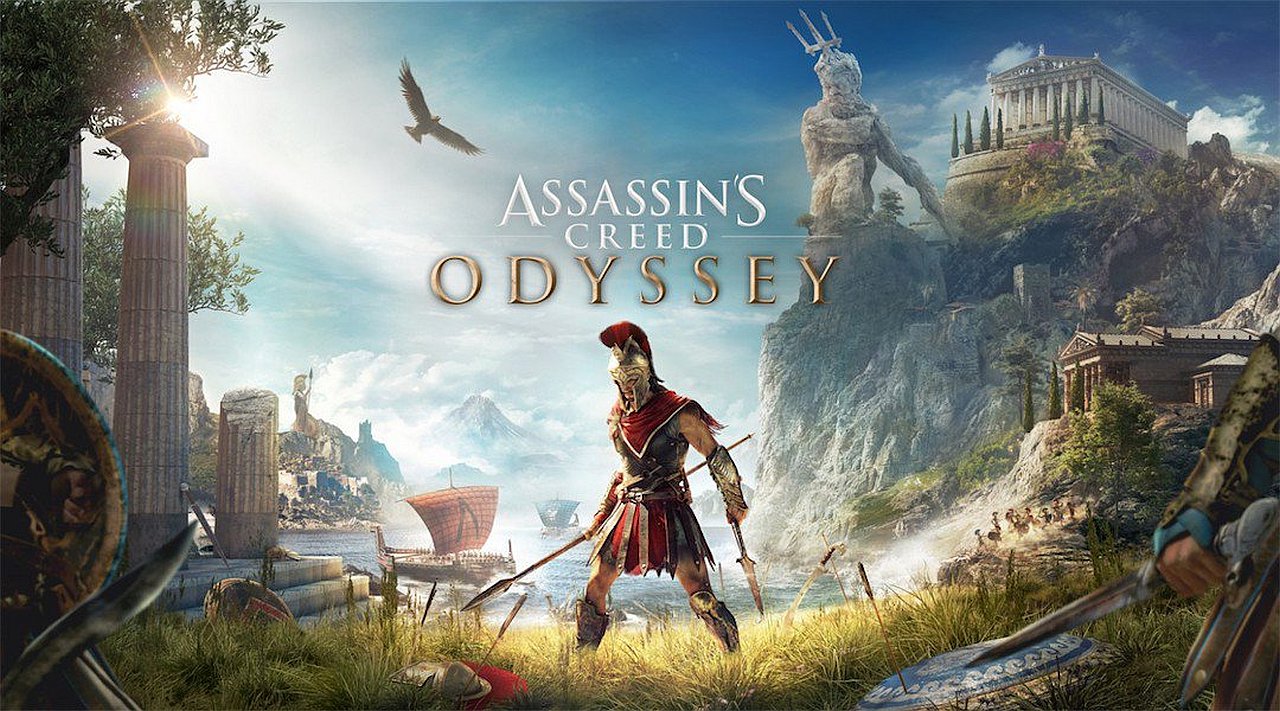
Ironically for a game set in ancient Greece, Assassin’s Creed Odyssey is anything but Spartan. This epic-scale action-roleplaying game shines as a grand adventure through a magnificent and beautiful open world on a scale we’ve rarely seen. With so few compromises between quantity and quality, Odyssey vaults over its predecessors to become the most impressive game in the history of the series.
Assassin’s Creed Odyssey begins more than 2,400 years ago at the onset of the Peloponnesian war: a decades-long struggle between Athens and Sparta for dominion over the ancient Greek world. It’s a fitting period to explore that’s rife with social and political intrigue, full-scale warfare on land and sea, and a tangible air of myth and legend. And after an astonishing 60-plus hours of galloping, sailing, and slicing through that historical-fiction sandbox, it’s easy to see why it was worth fighting so hard over.
So this is the map of Assassin’s Creed Odyssey
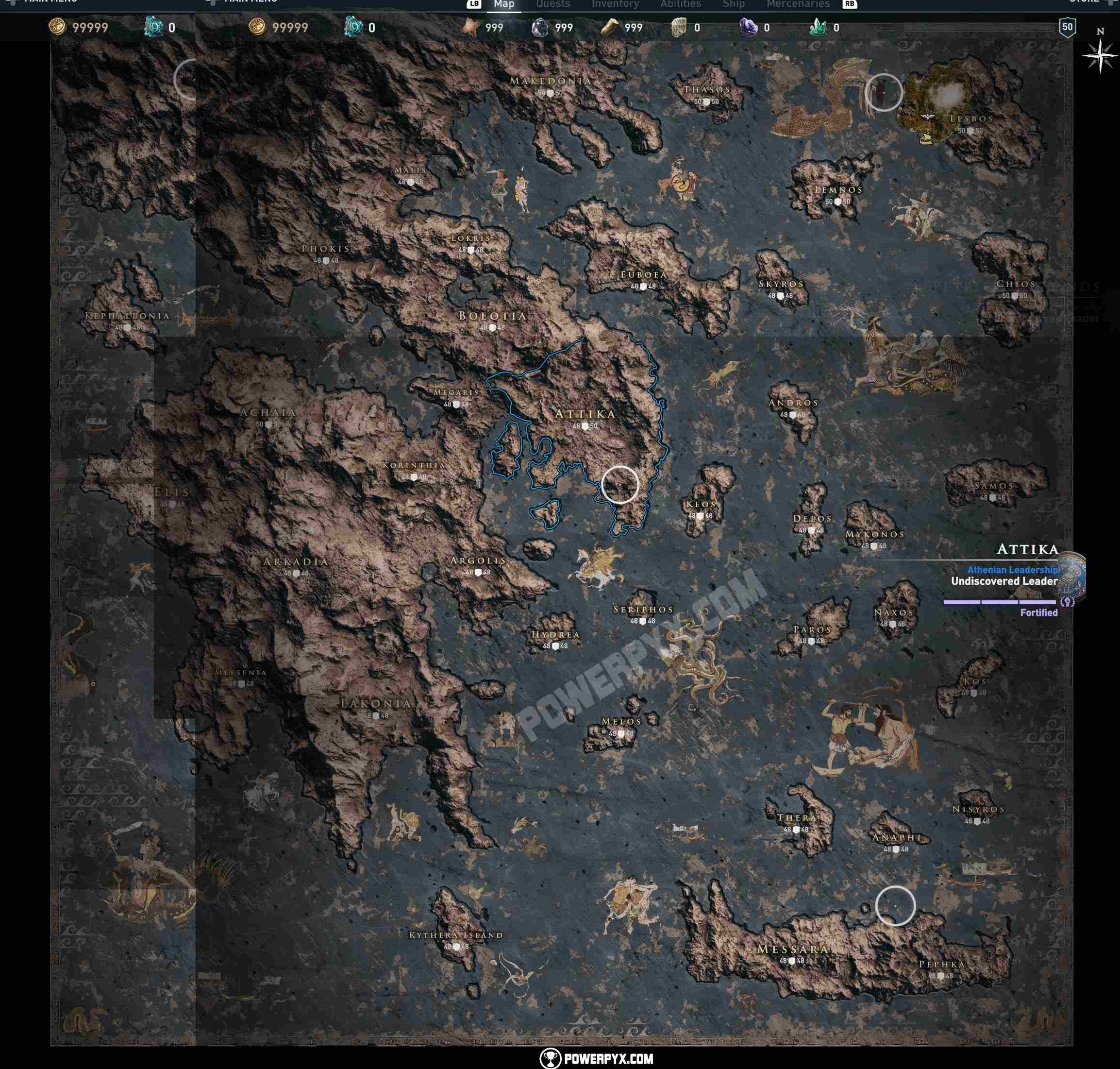
There are so many things to do in Assassin’s Creed Odyssey as you can see the map is very big and the game itself needed many hours to be completed. Now let’s talk about the gameplay.
Gameplay
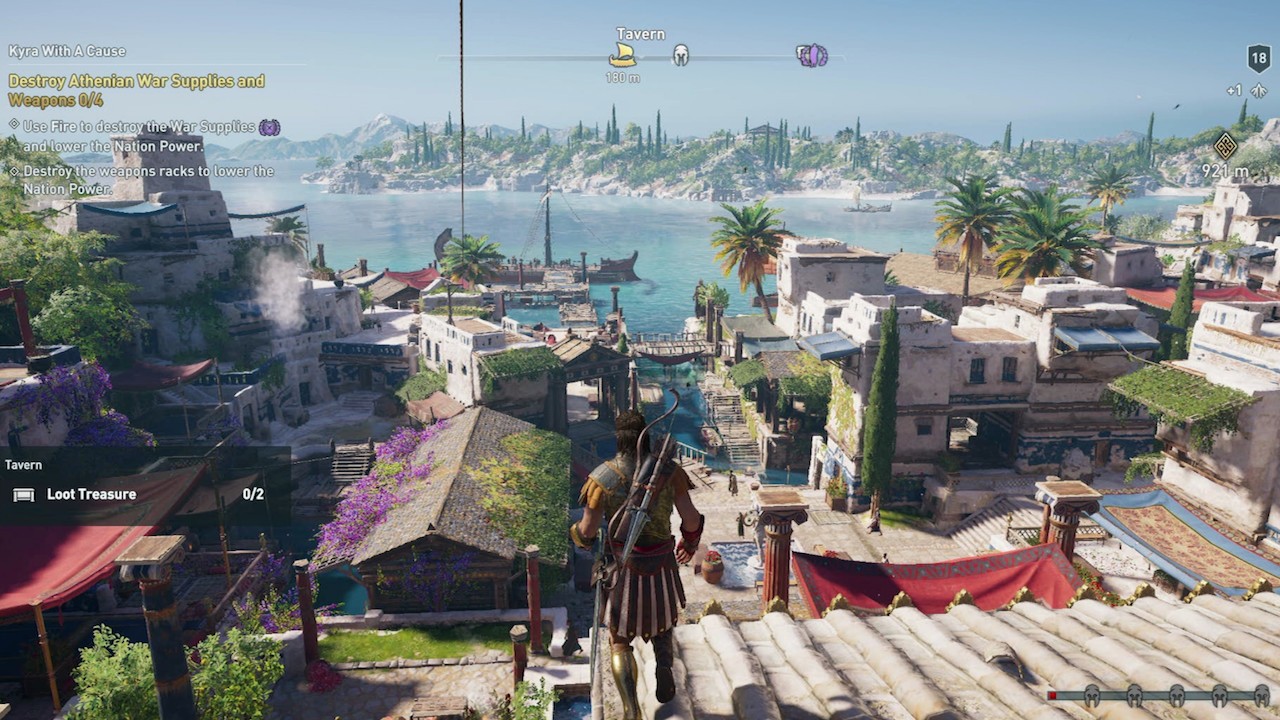
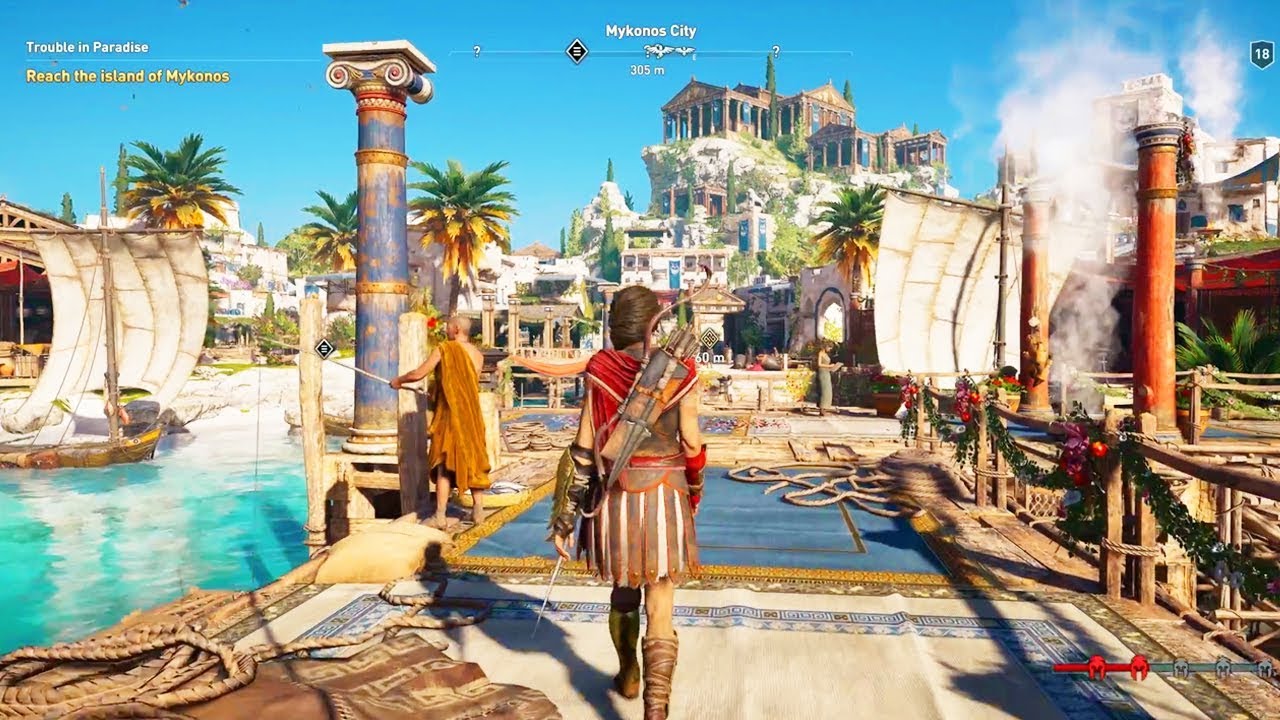
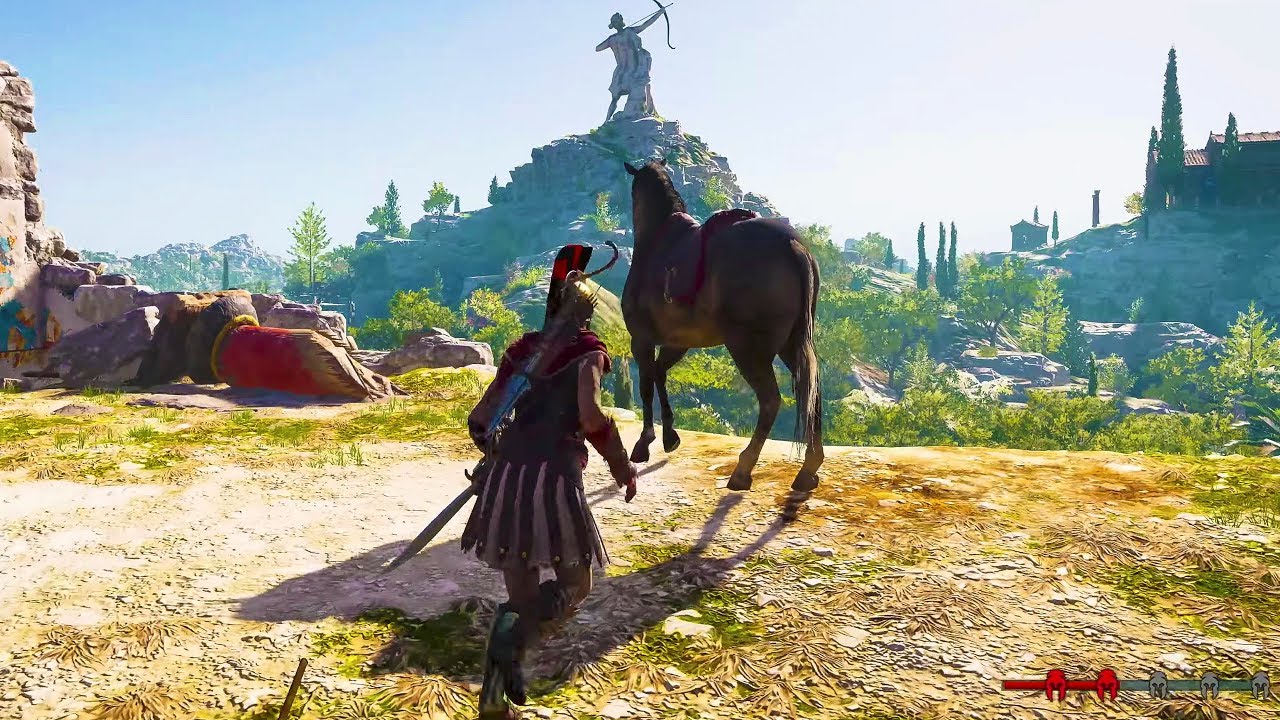
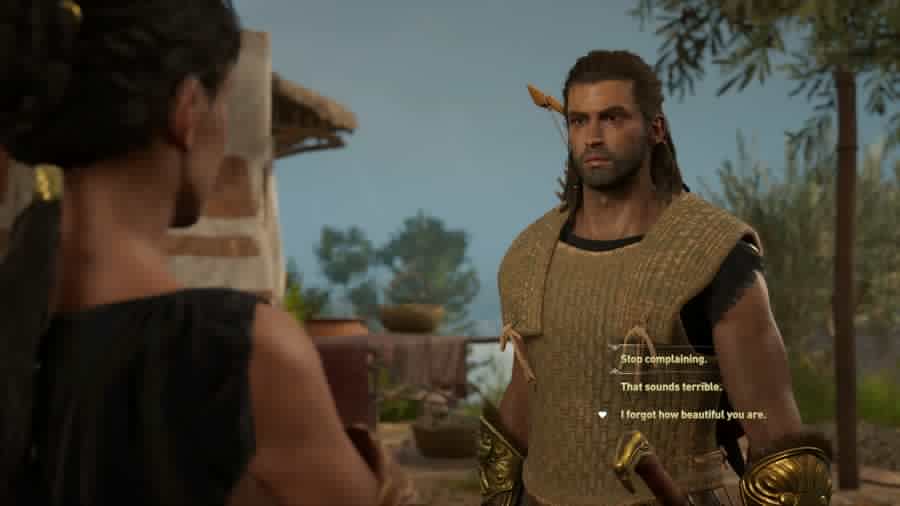
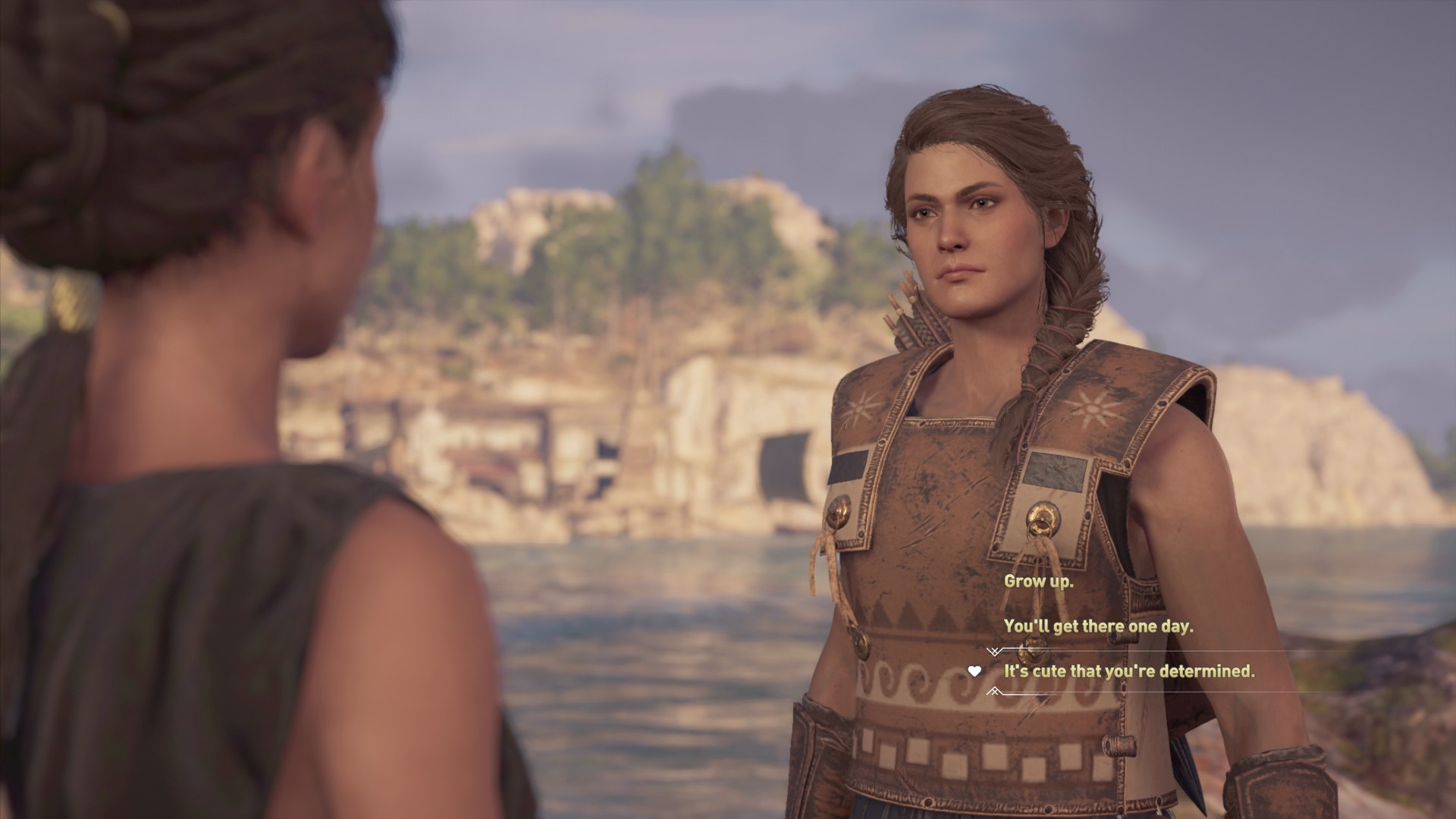
Assassin’s Creed Odyssey places more emphasis on role-playing elements than previous games in the series. The game contains dialogue options, branching quests, and multiple endings. The player is able to choose the gender of the main character, adopting the role of Alexios or Kassandra. The player can also develop romantic relationships with non-playable characters of both genders, regardless of which one they choose. The game features a notoriety system in which mercenaries chase after the player if they commit crimes like killing or stealing.
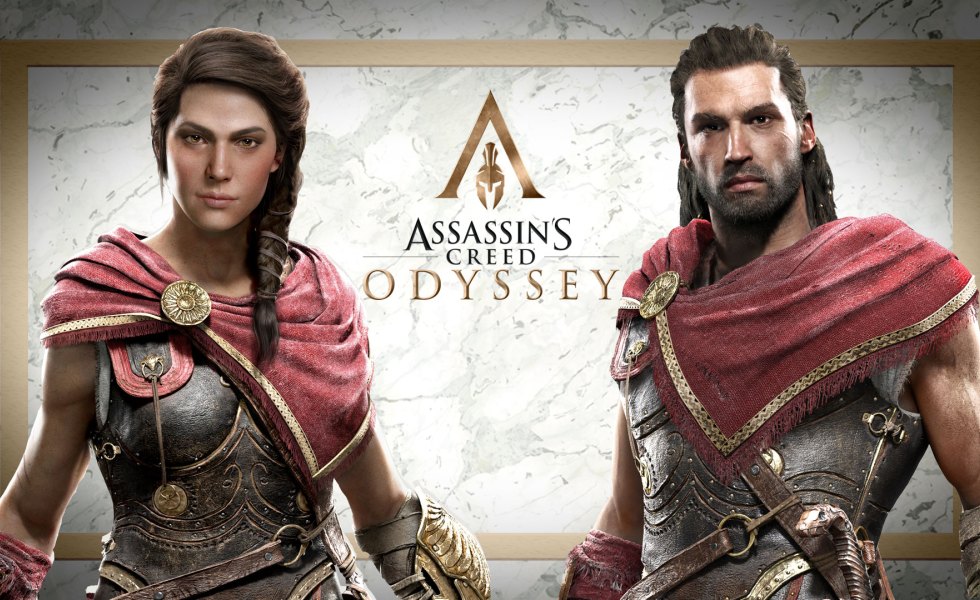
The player character, Alexios or Kassandra, is a mercenary, and a descendant of the Spartan king Leonidas I. They inherit his broken spear, which is forged into a blade to become a weapon that grants the player special abilities in combat. The game uses a skill treesystem that allows the player to unlock new abilities. The three skill trees are “hunter”, which improves player character’s archery, “warrior”, which puts emphasis on combat, and “assassin”, which focuses on stealth. This replaces the system used in Assassin’s Creed Origins, which granted the player a series of passive abilities.
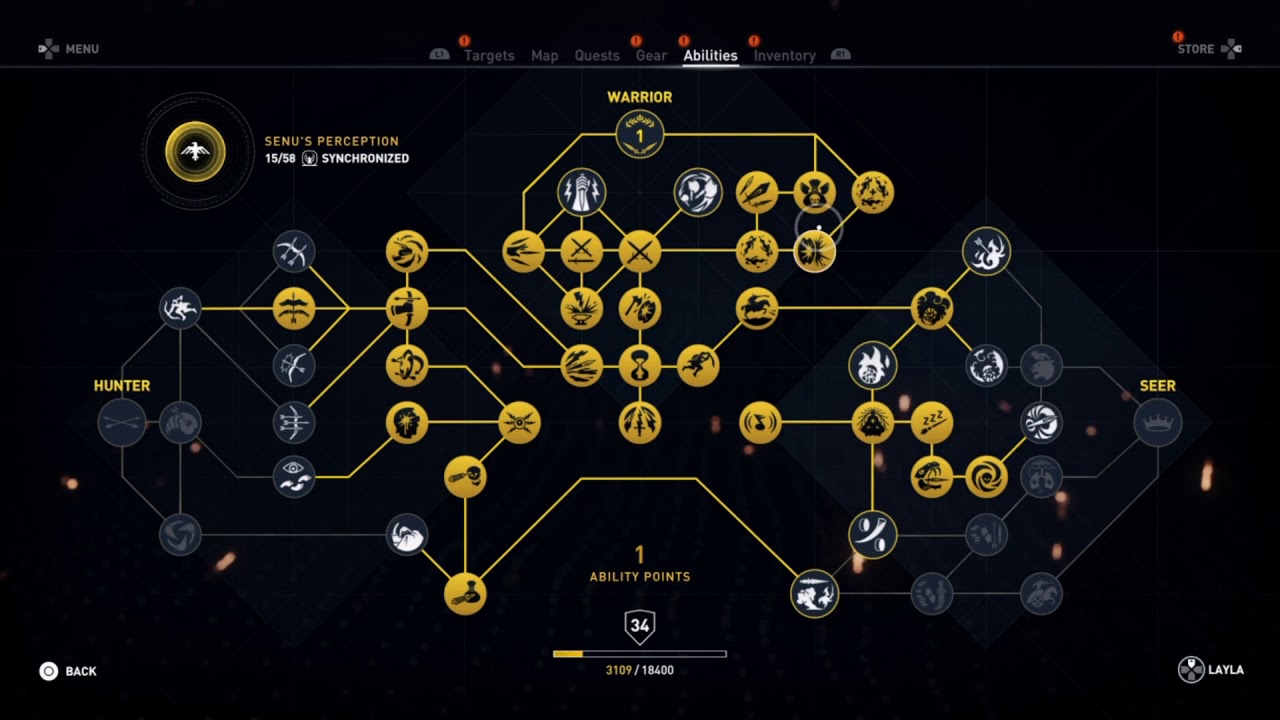
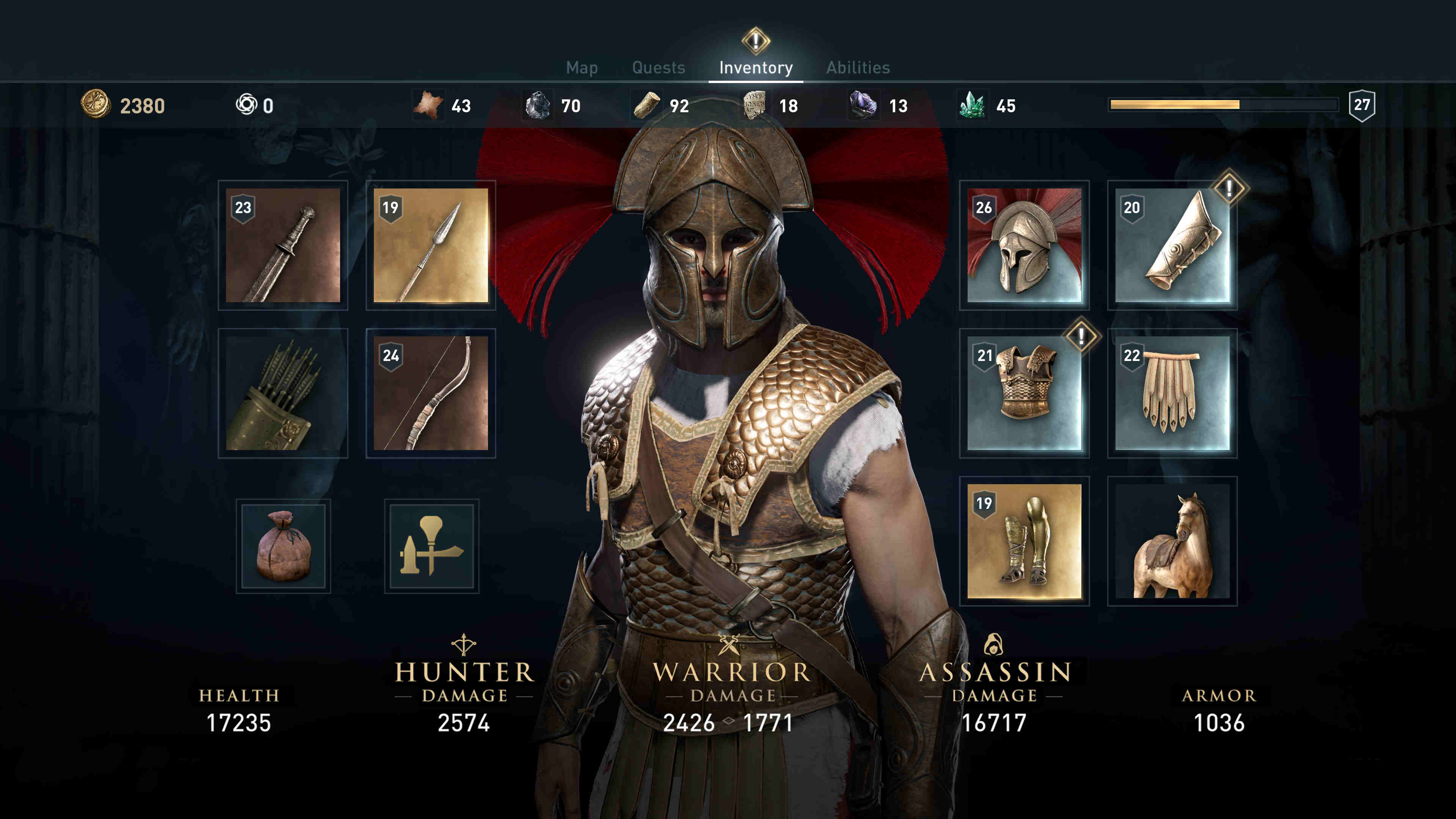
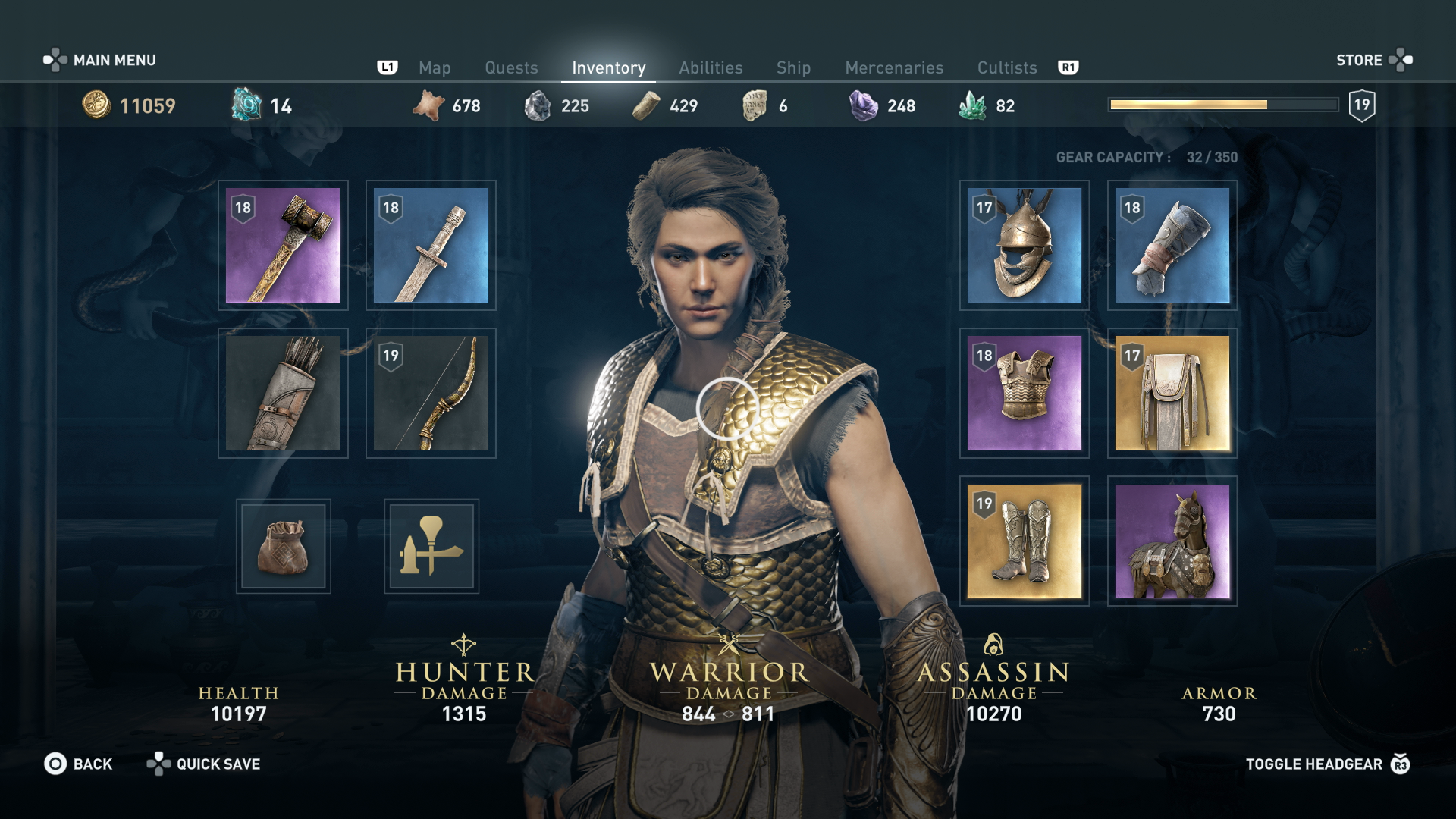
The hitbox combat system introduced in Assassin’s Creed Origins returns and is expanded upon to grant the player access to four different special skills when the ability bar fills up. These skills include calling a rain of arrows and a powerful kick to knock opponents off-balance, and are similar to the “Overpower” mechanic introduced in Origins that let the player use a powerful finishing move in combat. The game also features a gear system in which each piece of armor the player wears has different statistics and provides a range of advantages. These can be equipped and upgraded individually.
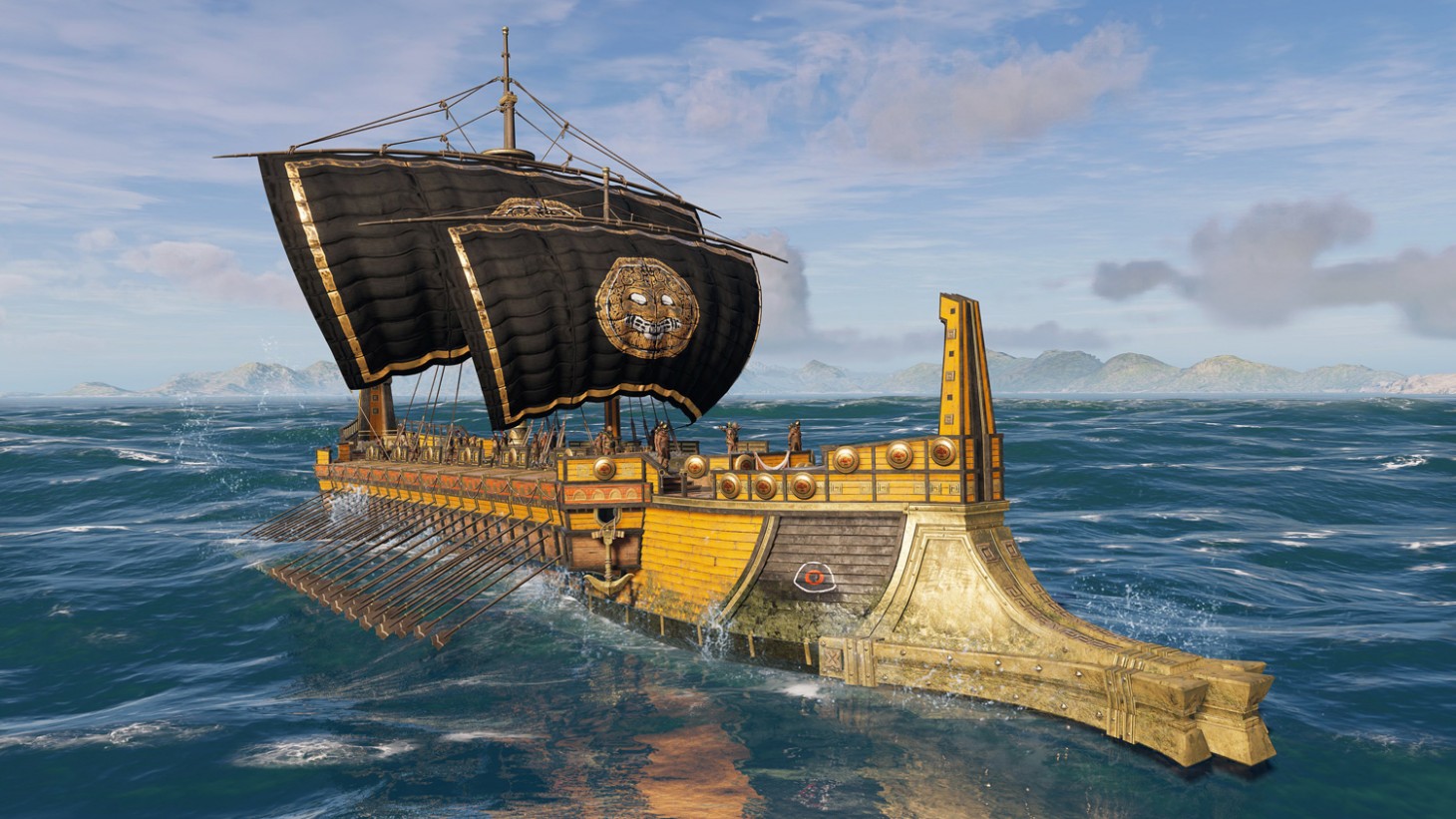
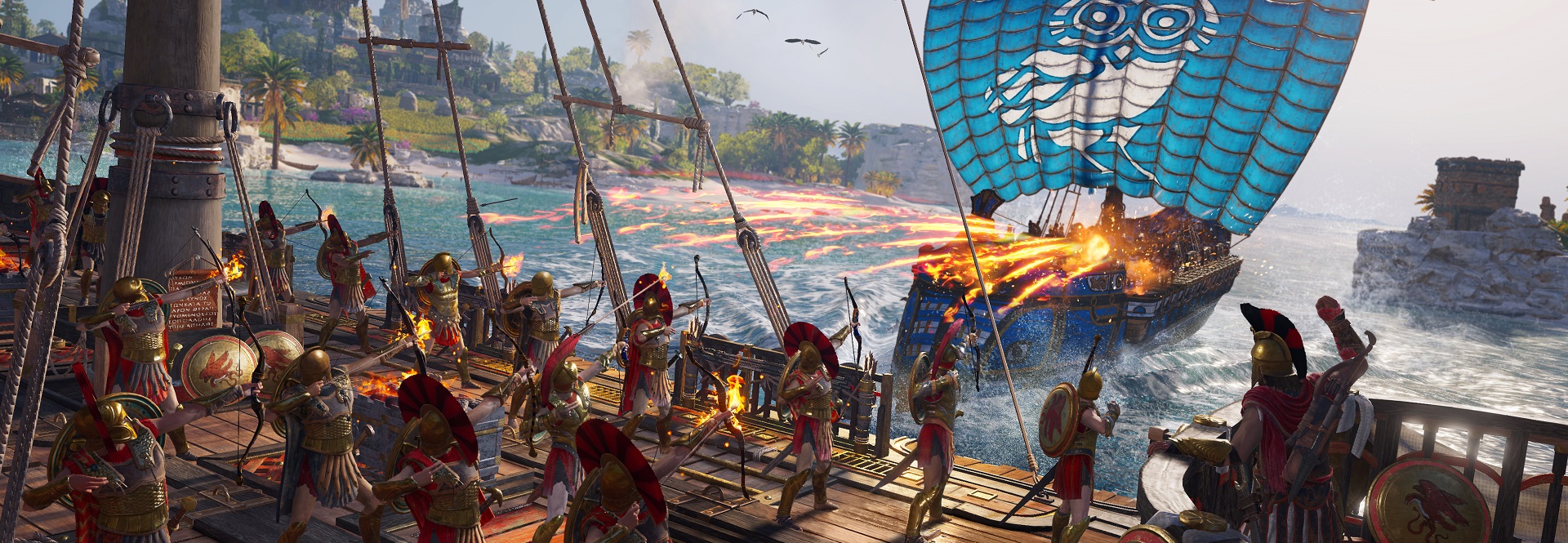
Assassin’s Creed Odyssey also features naval combat again, with the player having access to Hellenistic-era warships to explore the Aegean Sea. The conflict between Athens and Sparta is represented through a “War System” which enables players to take contracts from mercenaries and participate in different large-scale battles against hostile factions. The war system can change a faction’s influence over a region.
Story
Setting
The game is set in 431 BCE, four hundred years before the events of Assassin’s Creed Origins. It recounts the secret fictional history of the Peloponnesian War, which was fought between the city-states of Greece. The player takes on the role of a mercenary and is able to fight for the Delian League, led by Athens, or the Peloponnesian League, led by Sparta. The game’s main storyline has the player character attempting to restore their fractured family after they and their sibling were thrown off a cliff in their youth and left for dead by their father by command of the Spartan oracle. Parallel quest lines deal with the extirpation of a malign cult spanning the Greek world, and the discovery of artifacts and monsters from Atlantean times.
The game features a number of historical personages players can encounter and talk to, including Alkibiades, Aspasia, Aristophanes, Brasidas, Euripides, Kleon, Herodotos, Hippokrates, Pausanias, Perikles, Phidias, Pythagoras, Sokrates and Sophokles. It also includes historical and mythical locations such as the Agora of Athens, Kephallonia, Ithaca, the Odeon of Athens, the Foloi oak forest, the statue of Zeus at Olympia, Naxos, Lesbos, ancient Athens, ancient Argolis, Pnyx, Phokis and Mesara.
Plot
During the Battle of Thermopylae, King Leonidas leads the Spartan army against a Persian charge. The battle is won, but Leonidas is informed by a captured enemy soldier that the existence of the mountain path has been revealed to the Persian army, which is moving to surround the Spartans by morning. Nevertheless, Leonidas resolves to hold off the Persian advance.
In the present, Layla Hassan recovers the Spear of Leonidas and together with Victoria Bibeau, extracts the DNA of two individuals from it, the siblings Kassandra and Alexios. With help from the Assassins, Layla picks one of the siblings (the “Misthios”) and activates the Animus to find the location of the Staff of Hermes.
The Misthios started as a young Spartan child, raised by their parents Nikolaos and Myrrine, and inherited the Spear of Leonidas from Myrrine as one Leonidas’ descendants. However, one day, both the Misthios and their sibling are thrown off a mountain due to an oracle’s prophecy, with the Misthios being dropped by Nikolaos himself. The Misthios survived the fall and fled to the island of Kephallonia, where they grew up performing odd jobs until the Peloponnesian War begins.
The Misthios is approached by a wealthy man named Elpenor, who hires them to assassinate “The Wolf of Sparta”. The Misthios later discovers that the Wolf is Nikolaos himself and confronts him. Nikolaos admits that he regrets what he had done, but did so for the good of Sparta. The Misthios has the choice of executing or sparing Nikolaos, and finds out that Nikolaos is actually their stepfather and that Myrrine is in danger. The Misthios confronts Elpenor, who reveals he knew Nikolaos was their stepfather and wanted him dead in order to drag out the war. He then offers another job to assassinate Myrrine, but the Misthios refuses and Elpenor flees. The Misthios then travels to Delphi to ask the Pythia the whereabouts of Myrrine, where they encounter Herodotos, who recognizes the Spear of Leonidas the Misthios carries. Upon meeting the Pythia, the Misthios is warned about the Cult of Kosmos, who seek to kill them and their family. The Misthios further investigates the Cult by assassinating Elpenor and using his disguise to infiltrate a Cult meeting. They find that the Cult plans to take advantage of the war to seize control of all of Greece, and that their enforcer Deimos is in fact the Misthios’ sibling, now brainwashed to follow the Cult’s orders.
The Misthios continues on their journey all over Greece, clearing out Cult corruption from both Sparta and Athens and befriending powerful Greek figures such as Perikles and Aspasia. They are unable to stop Perikles’ assassination at the hands of Deimos, but are able to reunite with Myrrine and find their true father, Pythagoras. Myrrine and Pythagoras explain that they conceived Alexios and Kassandra to preserve Leonidas’ bloodline, as he and his descendants have a special connection to Precursor artifacts, such as the Spear of Leonidas. Pythagoras tasks the Misthios to recover several Precursor artifacts needed to permanently seal the hidden Precursor city of Atlantis so that its knowledge cannot be misused by enemies like the Cult. Afterwards, the Misthios manages to avenge Perikles’ death by assassinating his political rival, Kleon. Depending on the Misthios’ actions, they can convince Deimos to abandon the Cult and rebuild their family with Nikolaos, Myrrine, their sibling, and their new stepbrother Stentor living happily together in their old family home.
With war averted and the Cult virtually eliminated, the Misthios heads for the Cult’s secret meeting place under the Temple of Delphi to destroy the Precursor pyramid the Cult was using to influence Greek politics. Touching it, they receive visions of future conflicts to come before destroying the pyramid. Aspasia then arrives and reveals that she was the original leader of the Cult but disagreed with its actions as its members became more corrupt, and she thanks the Misthios for destroying the Cult. The Misthios has the option of killing or sparing Aspasia, but cuts ties with her regardless. Finally, the Misthios collects all of the artifacts needed to seal Atlantis, and activates a recording from the Precursor Aletheia who pleads with the Misthios and Layla that Precursor knowledge and technology is not meant for humans and must be destroyed in order for humans to reach their true potential. Pythagoras reluctantly passes the Staff of Hermes on to the Misthios, dying in the process. The Misthios then continues their adventures.
In the present, Layla uses the data from the Animus to find Atlantis and activate it. As the Assassins analyze the data within, Layla is shocked to find the Misthios, kept alive until modern times by the Staff of Hermes. The Misthios warns Layla that the world needs a balance between order and chaos, the Templar Order and Assassins respectively, and either side prevailing over the other will result in the world’s doom. The Misthios also explains that Layla is the prophesied one who will bring balance to order and chaos and gives her the Staff of Hermes, sacrificing their life in the process.
Assassin’s Creed Odyssey is a resounding achievement in world building, environment, and engaging gameplay with occasional problems throughout. Its incredible recreation of ancient Greece makes the game excellent, and its excellent systems mesh together in a way that’s hard to beat. While there are definite rough edges, Odyssey sets a new bar for Assassin’s Creed games and holds its own in the eternal debate over the best open-world roleplaying games ever.
My Source:(https://www.wikipedia.org)
 Gaming Central